

Systems Engineering
Autonomous Systems
Decentralized Multi-Robot Path Planning
Mobile robots supporting logistics, surveillance, and rescue must navigate safely as obstacles move and other robots cross their routes. Reliable navigation requires continuous replanning that balances path length, smoothness, and collision avoidance within the limits of onboard computing. Hybrid planners initialized from a single route can restrict exploration and become trapped in local optima, while computationally intensive optimization can delay decisions. iMSEL is developing a GPU-enabled decentralized planning framework that combines diverse global route generation with rapid local refinement, allowing each robot to adapt its own path as the environment changes.
Loading in-page video. Autoplay starts muted; use the player controls to turn on sound.

At the core of the framework is Evolutionary Dynamic Programming (EDP), a new GPU-compatible approach developed by iMSEL for generating multiple high-quality global paths. A visibility graph represents feasible connections around obstacles, and a Markov decision process accounts for robot position, orientation, travel distance, and turning. EDP decomposes this process into state-value subproblems, updates them simultaneously on GPU threads, and iteratively propagates values from the goal toward the starting point until convergence, without a predetermined sequential solution order. The resulting diverse paths initialize independent particle swarm optimization (PSO) populations that refine the first two waypoints near the robot in parallel. This global–local strategy builds on iMSEL’s earlier adaptive visibility-graph and EDP–genetic-algorithm studies. Planning and control run on a Jetson AGX Orin onboard each TurtleBot 3 Waffle Pi; the experimental system supplies robot and obstacle locations from shared overhead cameras through ROS and Wi-Fi. Each robot independently replans while treating the other robot as a moving obstacle.



Experiments demonstrated single-robot navigation and decentralized two-robot collision avoidance in six 4.4 m × 4.4 m environments with moving obstacles. The onboard planner continuously generated paths in approximately 0.07 seconds per path (14 Hz), while obstacle detection and robot localization operated at approximately 0.06 seconds per frame. Across four benchmark maps and 100 repeated trials per map, PSO+EDP achieved mean planning runtimes of 0.0685–0.0782 seconds. Its mean composite path-cost values were 8.8–14.4% lower than the tested A* baseline, with fitness standard deviations of 0.0005–0.0028, compared with 0.0128–0.0992 for GA+EDP. These results show improved path quality and repeatability; A* remained faster at 0.0123–0.0130 seconds, illustrating the tradeoff between planning speed and path quality.
Human Factor Characterization
Intelligent Situation Awareness Evaluation
Unexpected pedestrian activity at railroad grade crossings can create dangerous situations that object detection alone cannot explain. iMSEL is developing vision-based situation awareness that evaluates how pedestrians move, rather than simply whether they are present. The framework follows body-keypoint trajectories to recognize departures from normal walking and locate potentially unsafe behavior, such as lingering or squatting, in the video. Learning from normal examples reduces dependence on collecting and labeling every possible unsafe event.
Loading in-page video. Autoplay starts muted; use the player controls to turn on sound.
Earlier iMSEL studies used recurrent reconstruction and semi-supervised generative adversarial networks to learn normal motion. The latest STGCN-PAD framework adds a spatial-temporal graph convolutional network, connecting body joints within each frame and following them across time. It reconstructs pedestrian trajectories and flags unusually large reconstruction errors. An MLP-Mixer reconstruction option accelerates inference while maintaining useful discrimination between normal and abnormal motion.

On the study’s grade-crossing dataset, STGCN-PAD achieved 88.2% AUC with CNN reconstruction and 87.5% AUC with MLP-Mixer. The MLP-Mixer produced roughly a tenfold inference speedup relative to the earlier GAN approach, and the Jetson AGX Orin field system ran at around 20 frames per second. Tests varied crossing locations and camera views; subtle lingering and partially visible pedestrians remained challenging. These are research evaluation results, not a guarantee of safety-system performance.


Perception Systems
Real-time Railroad Inspection on Edge
Missing track fasteners and rail-surface damage can compromise railroad operations, yet manual inspection and offline image analysis delay the identification of problems. iMSEL is developing lightweight computer-vision methods that analyze track imagery directly on edge devices. The goal is to identify essential components, including clips and spikes, and map surface defects while balancing detection quality with the limited computing resources available on mobile inspection platforms.
Loading in-page video. Autoplay starts muted; use the player controls to turn on sound.
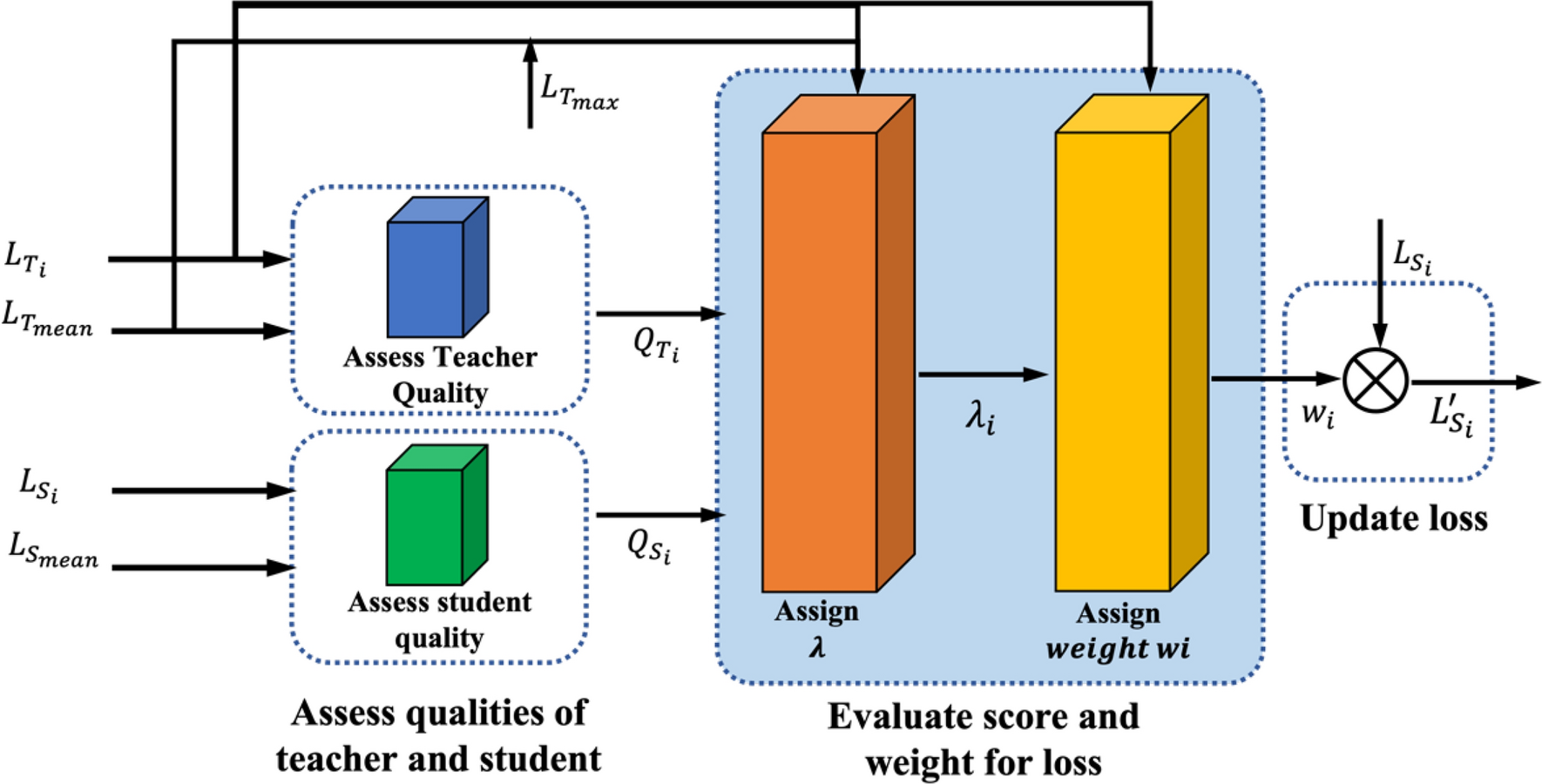
AWL-NanoDet methodology (2023). The first study improves NanoDet with an adaptively weighted loss that assesses both the teacher and student during training. When teacher guidance is unreliable, the student loss receives less weight; once the teacher improves, the weighting encourages student learning. This adjusts knowledge transfer without enlarging the inference model. After training, only the lightweight student is retained to detect and classify track components.
AWL-NanoDet results. On the study’s track-component dataset, the model achieved 93.4% mAP@0.5 and 69.9% mAP@0.5:0.95, compared with 91.7% and 64.9% for native NanoDet. Its model size remained below 10 MB, with 1.52 GFLOPs. The paper’s TensorRT evaluation on Jetson AGX Orin reported 4.2 ms inference per image.

TNet methodology (2025). The second study extends component detection to simultaneous rail-surface defect segmentation. A pre-trained detector stays frozen, preserving its original task, while a lightweight TNet learns to produce defect masks. TNet combines feature adapters, a Bias Correction Network, Channel-Score Attention, and efficient upsampling to adapt and fuse features for the new task. Only the added modules require training.
TNet results. The added network uses less than 5 MB and 0.96 GFLOPs. On the study’s custom dataset, defect segmentation achieved 93.20% pixel accuracy, a 0.7763 Dice coefficient, and 92.59% pixel-wise recall. The combined detector and TNet ran in 6.9 ms per image on AGX Orin. Pixel-wise precision was 66.83%, reflecting overestimated defect boundaries. Component-detection performance remained unchanged. These timings measure model inference, not the complete inspection workflow.

