

Dr Lang Yuan's lab focuses on both numerically and experimentally controlling microstructures and defect formation locally during alloy solidification to achieve desired mechanical and/or functional properties by advanced manufacturing, in particular, additive manufacturing, welding, casting and remelting processes.
Dr. Yuan specializes in alloy solidification and computational modeling of advanced solidification processes, covering from process to microstructure. He leads the Metal Additive Manufacturing Lab at the University of South Carolina (USC). He obtained his BS and MSc degrees in Materials Processing and Engineering from the Department of Mechanical Engineering at Tsinghua University, China, and his Ph.D. in Materials Science from the Department of Materials at Imperial College London, UK, in 2010. He joined the Manchester X-ray Imaging Facility in 2011 from Imperial College London, where he was a research associate on synchrotron X-ray Imaging, solidification microstructure prediction and semisolid deformation for metallic alloys. He worked at GE Global Research, NY as a lead research engineer before joining USC in 2018, driving and developing multiscale physics based computational models to improve process and understand defects in manufacturing processes. His current research is on process innovation enabled by additive manufacturing for processing hard-to-weld alloys and new materials and locally tailoring microstructure and defects in solidification-based processes.
Contact
 OFFICE LOCATION
McNair Aerospace Center
1000 Catawba St
Columbia, SC 29201
 Email
Email
langyuan@cec.sc.edu
 Phone
Phone
+1 (803) 576-8226
Research Interests
Microstructure and Defect Formation in Casting and Metal Additive Manufacturing
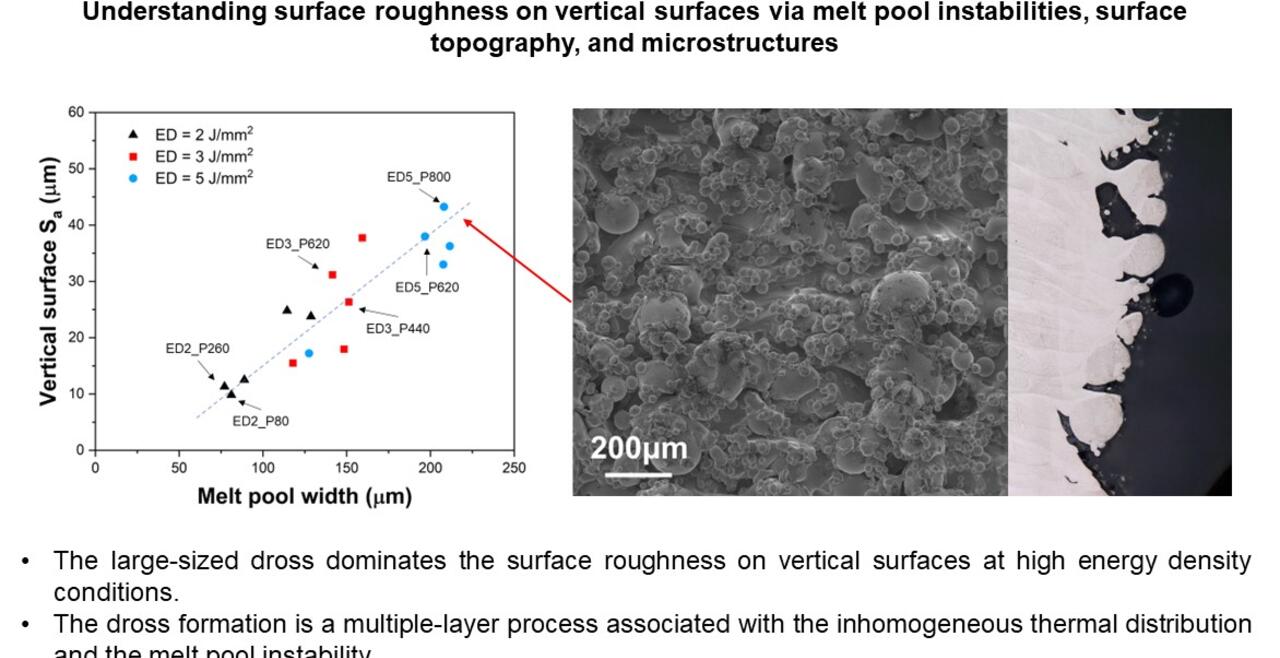
We investigate how processing conditions, melt-pool dynamics, and rapid solidification govern microstructure and defect formation in solidification processes. By integrating experiments, in-situ sensing, materials characterization, and computational modeling, we seek to understand and control grain and subgrain structures, segregation, surface roughness, porosity, and cracking.
Integrated Computational Materials Engineering
We develop multiscale, physics-based computational approaches that connect manufacturing process conditions to thermal history, melt-pool behavior, solidification, microstructure, defects, residual stress, and component-scale response. Our modeling spans powder-scale, process-scale, and microstructure-scale phenomena and leverages high-performance computing to enable predictive design and optimization of advanced manufacturing processes.
Additive Manufacturing of Hard-to-Weld Metals and Alloys
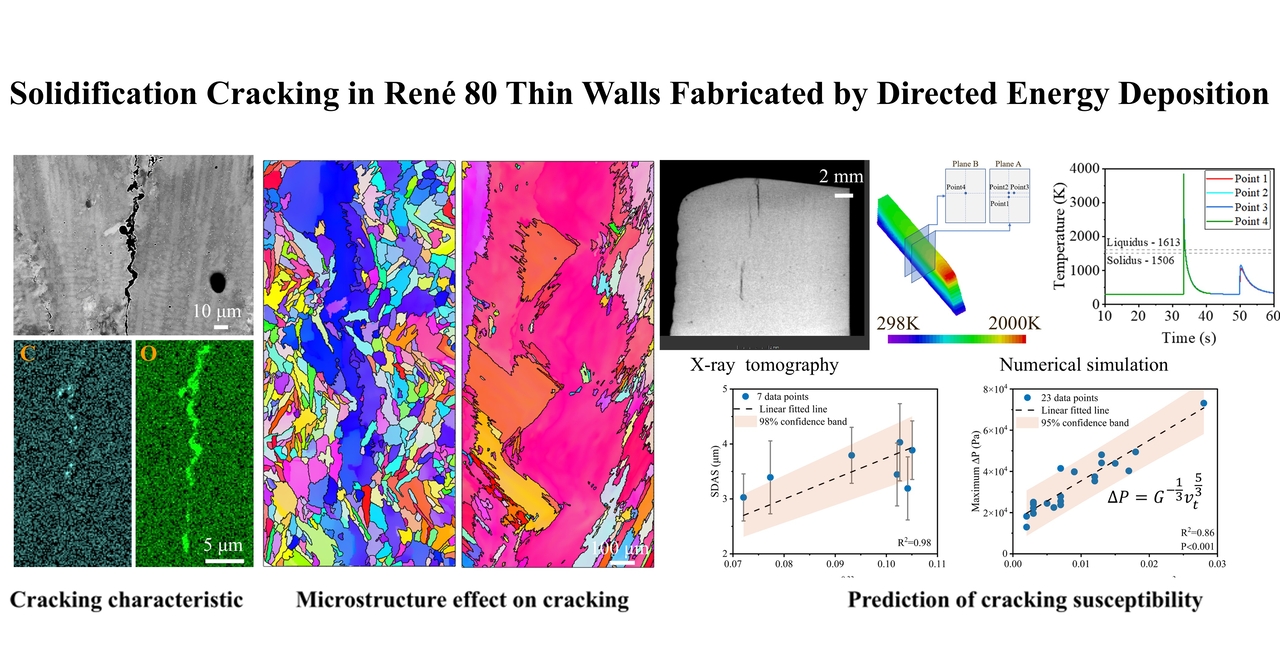
We explore new additive manufacturing strategies for alloys and materials that are difficult to process using conventional fusion-based methods. Research focuses on controlling thermal history and solidification to mitigate cracking and other defects while tailoring microstructure and properties, including studies of high-strength aluminum alloys, nickel-base superalloys, and refractory materials.
Process and Defect Prediction in Vacuum Arc Remelting
We develop multiphysics and multiscale computational models of vacuum arc remelting (VAR) to understand the interactions among electromagnetic forces, fluid flow, heat transfer, solidification, and solute transport. The goal is to predict melt-pool behavior, segregation, freckling, and other defects and to provide physics-based guidance for process optimization and large-scale alloy production.