

My laboratory integrates advanced experimental additive manufacturing with in-situ diagnostics and multiscale computational modeling, covering the full process chain from powder to finished part.
Additive Manufacturing & In-Situ Diagnostics
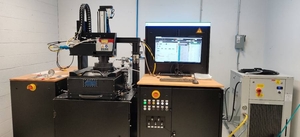
Aconity3D MIDI LPBF System An open-architecture research laser powder bed fusion system providing extensive access to processing parameters and machine controls. Unique capabilities include vacuum/low-pressure processing and high-temperature build conditions up to 500 °C, enabling fundamental studies of laser–material interaction, solidification, alloy processing, and defect formation. | 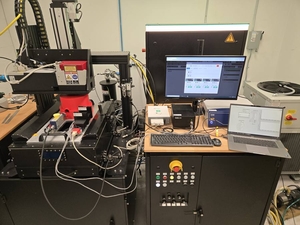
Multimodal In-Situ Process Monitoring Custom sensing and data-acquisition systems integrate thermal, optical, and event-based imaging with laser vibrometry for synchronized monitoring of transient phenomena during LPBF. These capabilities support investigations of melt-pool behavior, thermal response, spatter, process instability, and signatures associated with defect formation. Developed in collaboration with ARTS-Lab. | 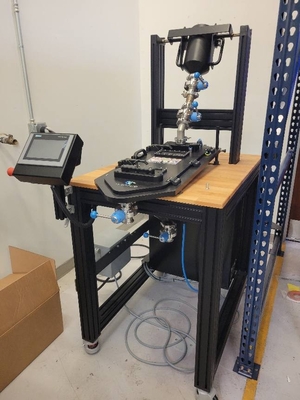
Powder Processing and Recycling An Aconity3D powder sieving and recycling system supports controlled powder handling, reuse, and systematic investigation of powder-processing relationships. |
Integrated Computational Tools & Modeling
Our computational capabilities span the complete AM process chain, from powder spreading and melt-pool dynamics to thermal history, solidification, microstructure, defects, residual stress, and component-scale response.
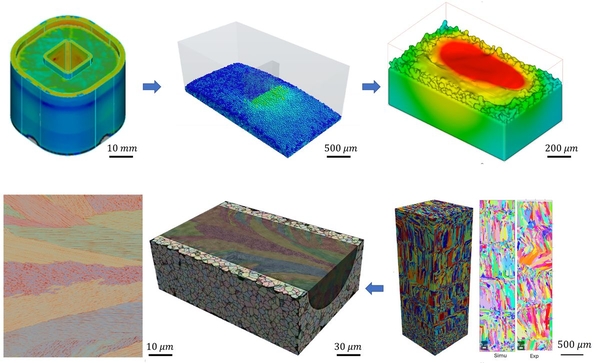
Open-Source Multiscale Solidification and Microstructure Simulation
muMatScale is an open-source solidification and microstructure modeling framework. It enables highly parallel simulations of nucleation, dendritic growth, competitive grain growth, and microstructure evolution under complex solidification conditions, with particular emphasis on casting and metal additive manufacturing. The framework is designed to scale from multicore engineering workstations to high-performance computing systems.
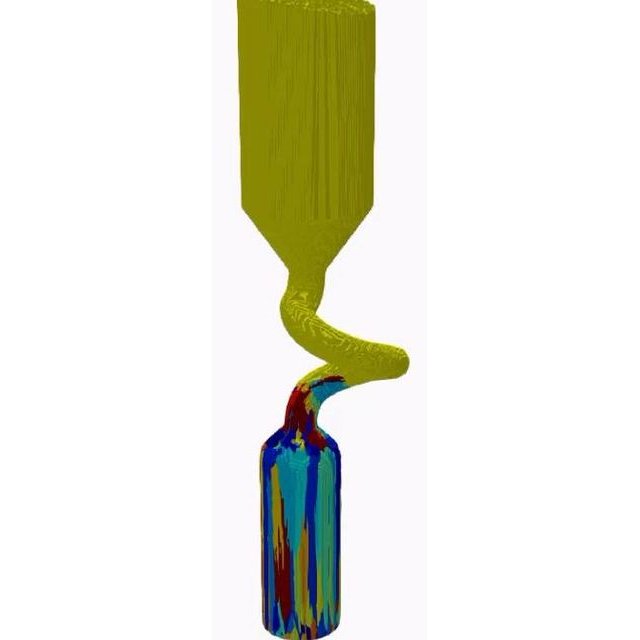 Grain structure coupled with external process modeling tool | 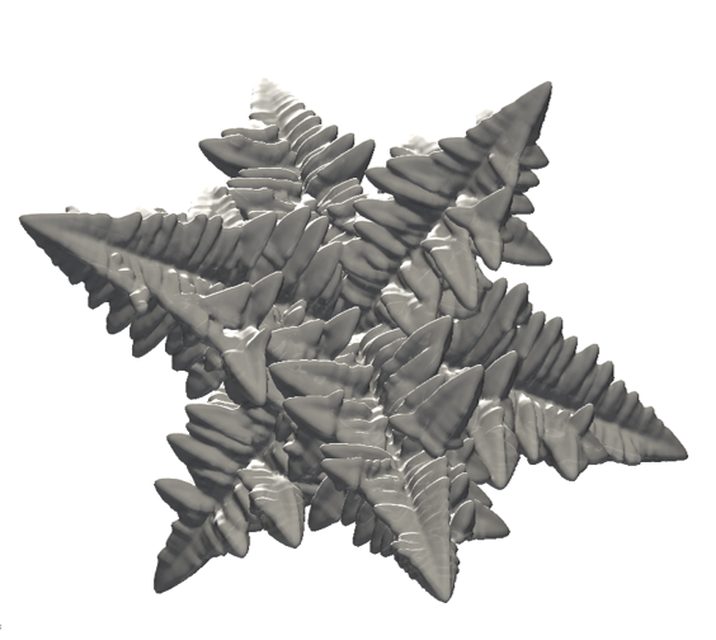 Dendrite growth | 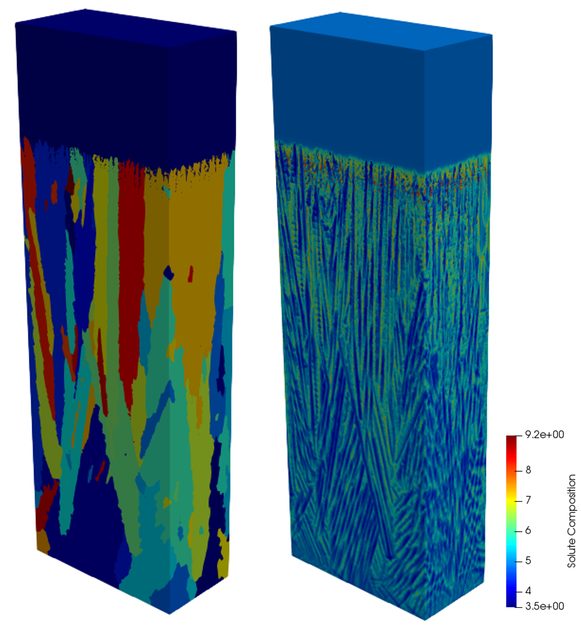 Dendritic growth under directional solidification conditions | 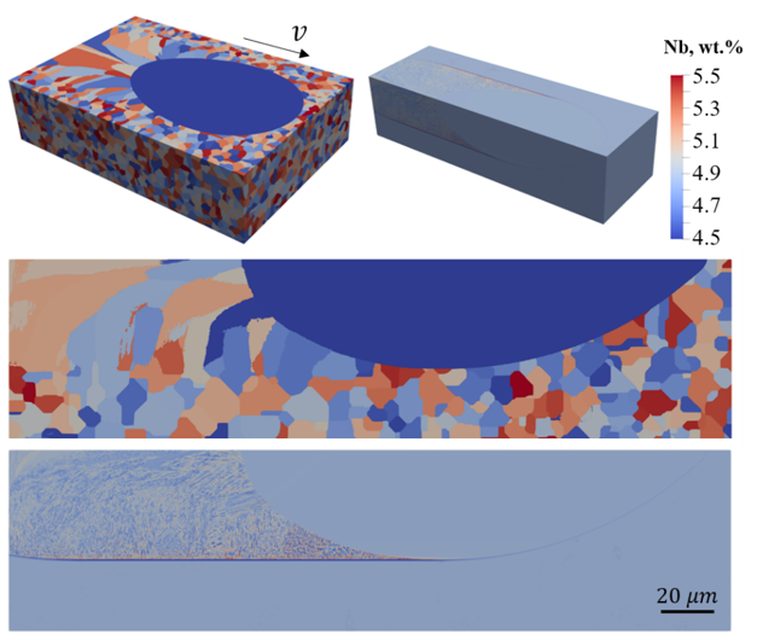 Grain and subgrain structure in AM with microsegregation |